The system of apartheid, a term coming from the Afrikaans word for ‘separation’, was officially established in South Africa by the National Party Government in 1948, and continued until the early 1990s. Apartheid enforced political, social, and economic segregation on racial grounds in South Africa, between the white minority population and the non-white majority.
In practice the apartheid regime was not very different from the policies of segregation which had been maintained in South Africa long before 1948. Now however, segregation became an official state system, introduced at a time when other countries were beginning to move away from such racist policies.
Here in Churchill Archives Centre we hold material about Britain’s relations with the apartheid regime from its early years in the 1950s right up to the first South African general election open to all, in 1994. There is too much to show in one exhibition, so here we concentrate mainly on voices for and against the international policy of trade and economic sanctions against South Africa, as well as boycotts of South African sport and anti-apartheid protests. We are grateful to our colleagues in the African National Congress archive at the University of Fort Hare, for their help with this exhibition.

South Africa and apartheid
Due to the repression of political opposition by the South African Government, the African National Congress decided in 1960 to establish ANC Missions in various countries overseas, to carry on their work in safety. One of the first of these was the London office. Its main task was to expose apartheid and popularize the struggle for liberation, through various campaigns including lectures, seminars, publications such as the magazine Sechaba and the use of the arts in plays about South Africa.
The first London office was in Gloucester Road, moving after some years to a permanent address at 28 Penton Street.
The ANC in London
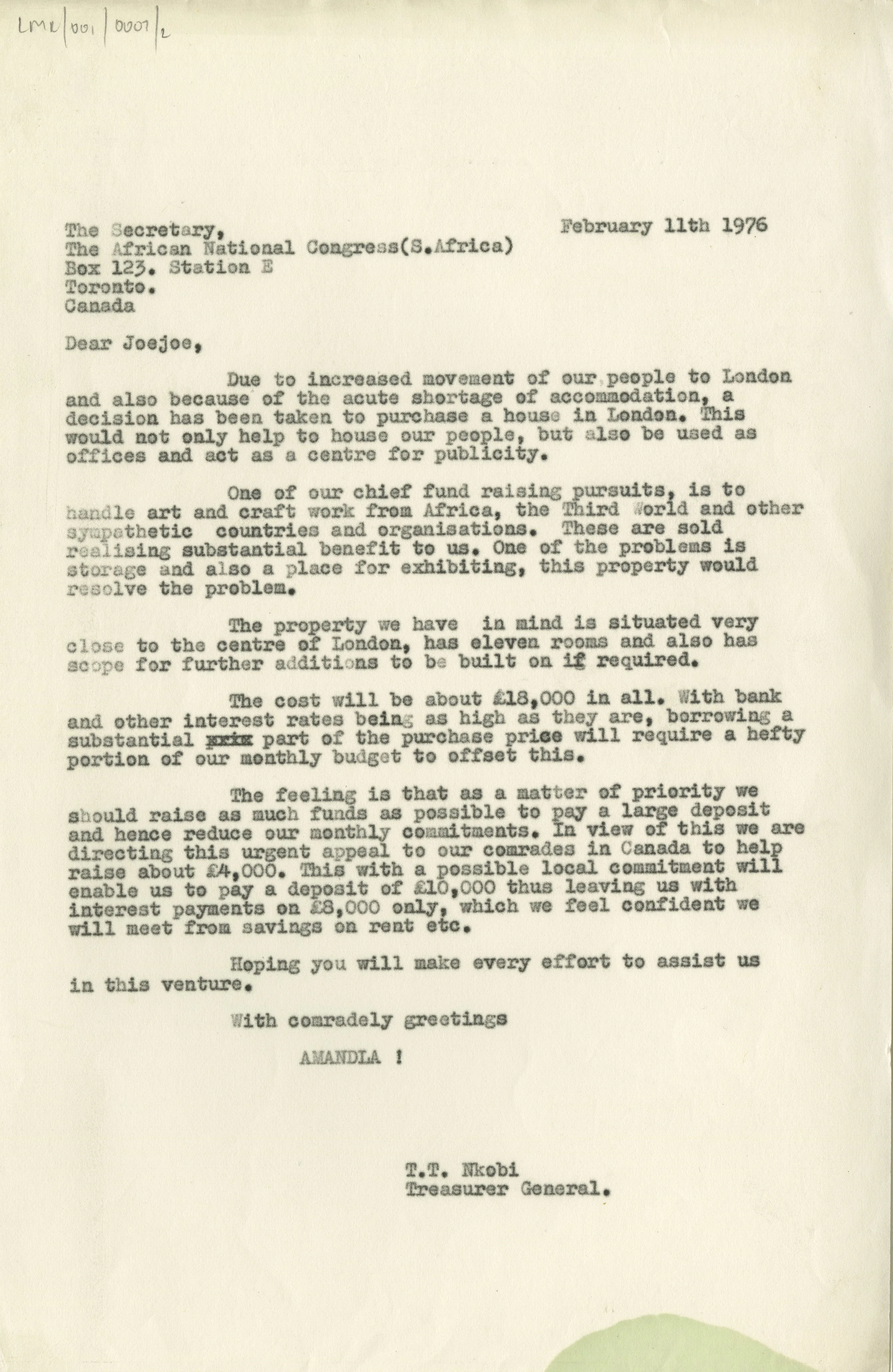
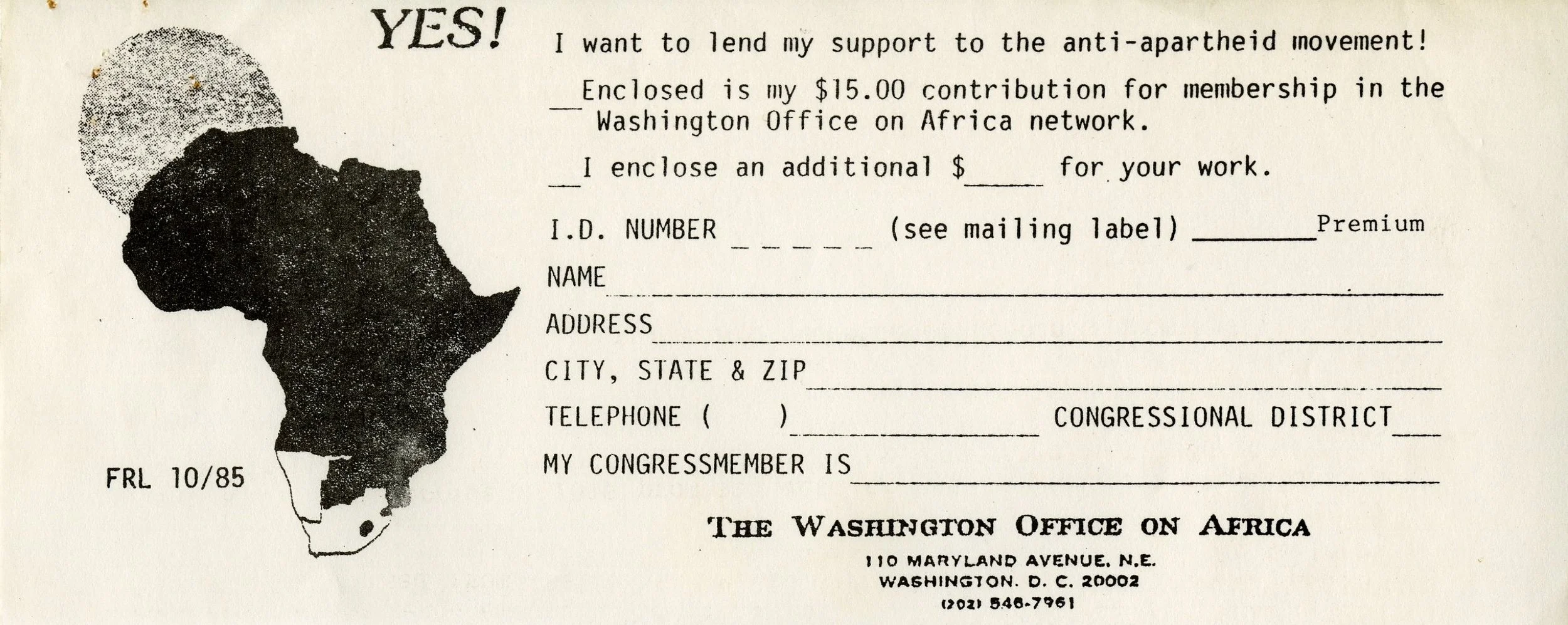
Letter on the establishment of a permanent base in London, and a typical fundraising flyer.
ANC archives, University of Fort Hare
Student protests
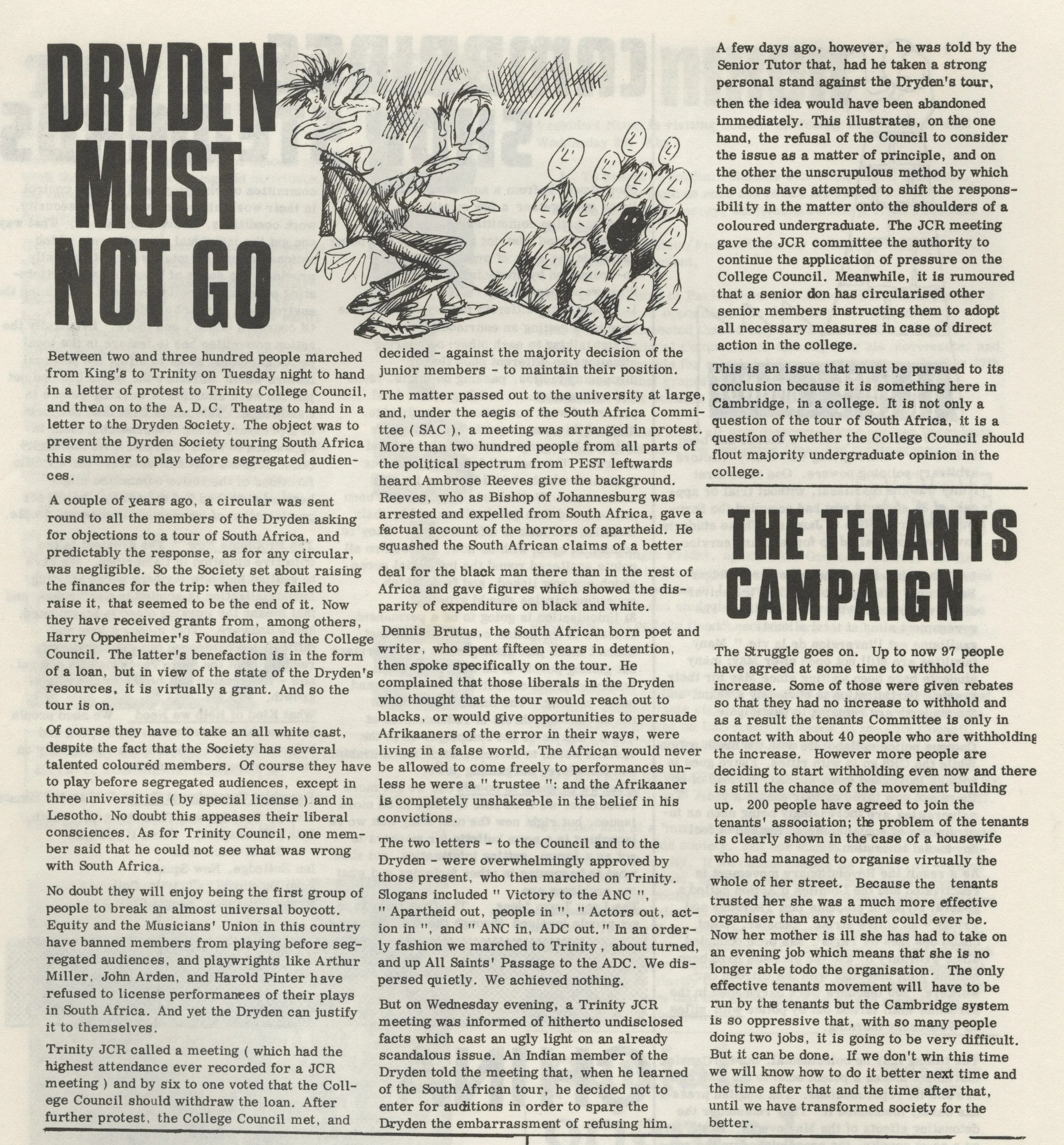
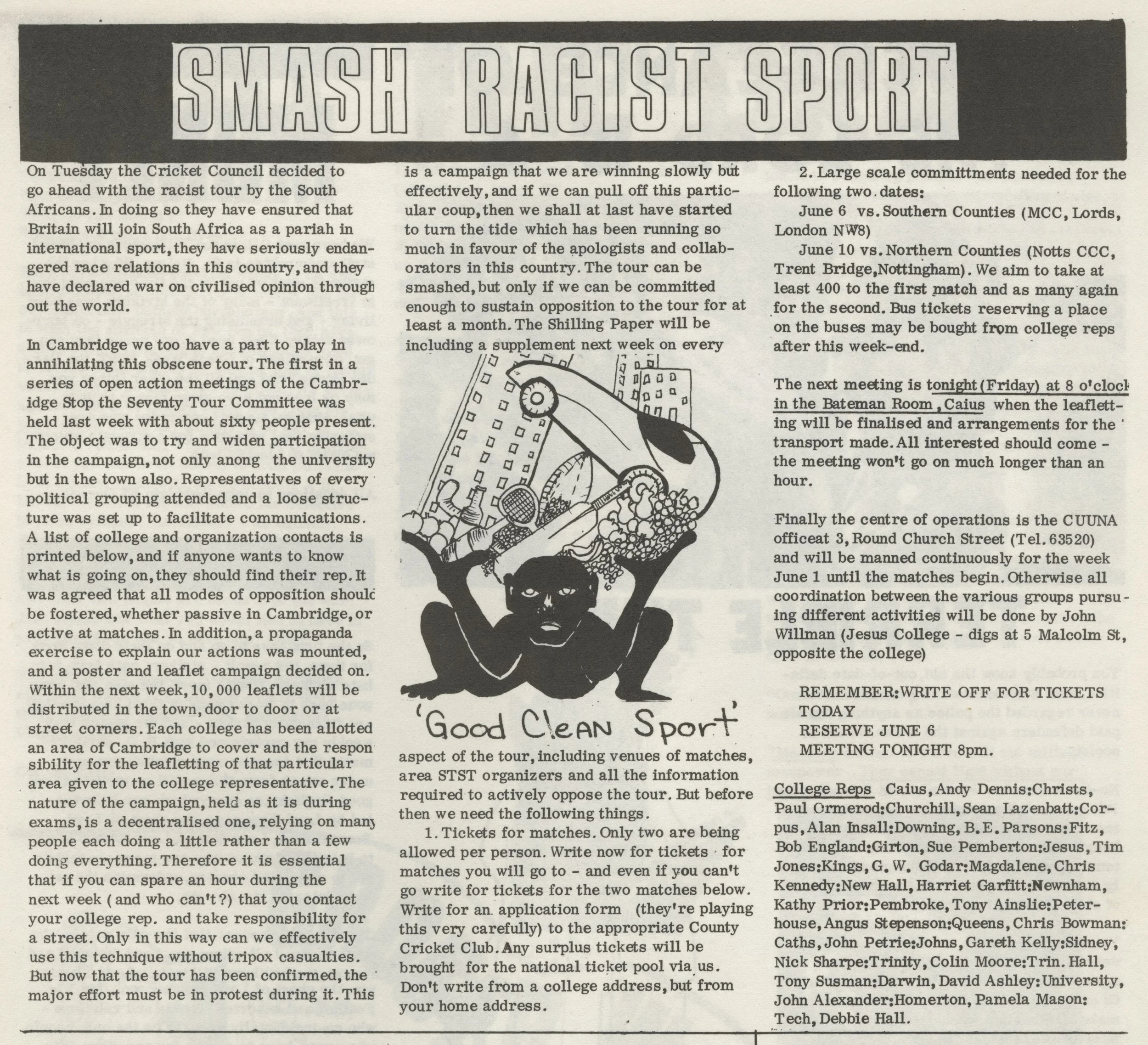
Amongst our college archives, we have several copies of the weekly Cambridge student magazine The Shilling Paper. Firmly on the left of British politics, The Shilling Paper covers protests against a planned tour of South Africa by a college drama society in 1969, and also details of a plan in 1970 to ‘annihilate’ the ‘obscene’ tour by the South African cricket team, after widespread protests against the tour of the Springboks, the national rugby team, in the previous winter.
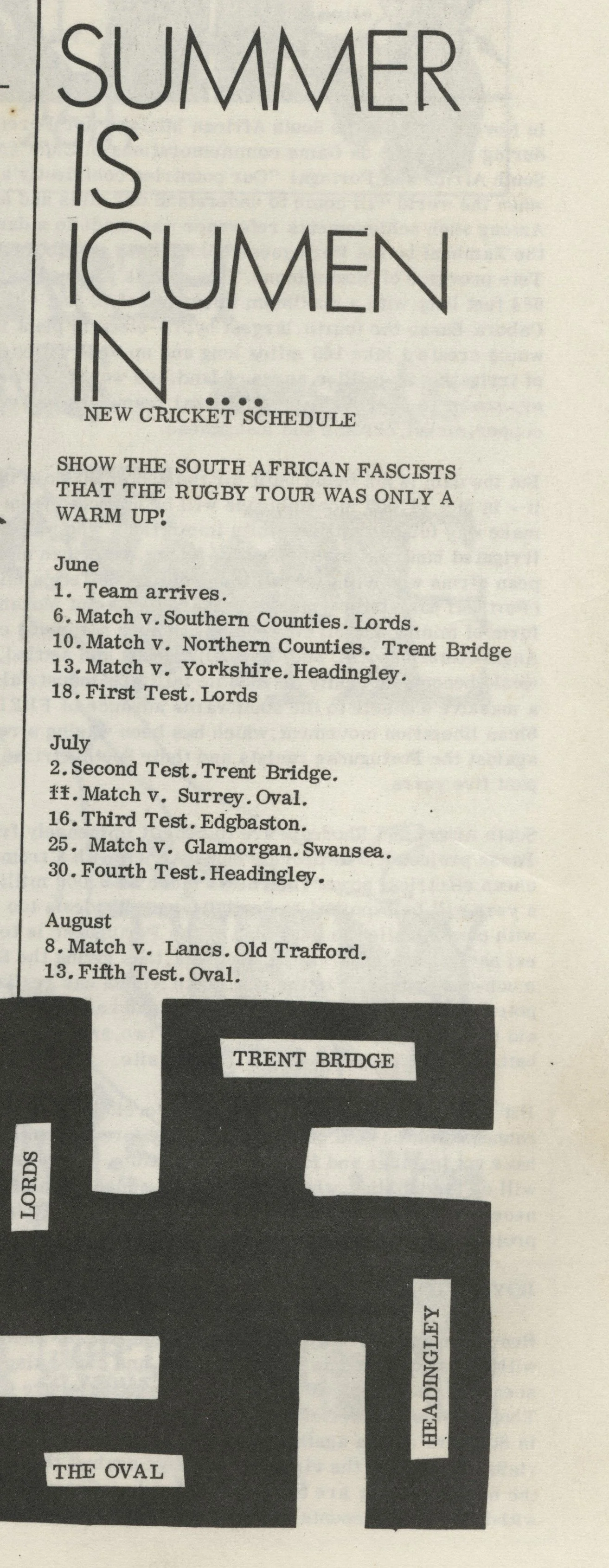
Churchill College archives, CCRF/151/16/4, The Shilling Paper, 1969-70
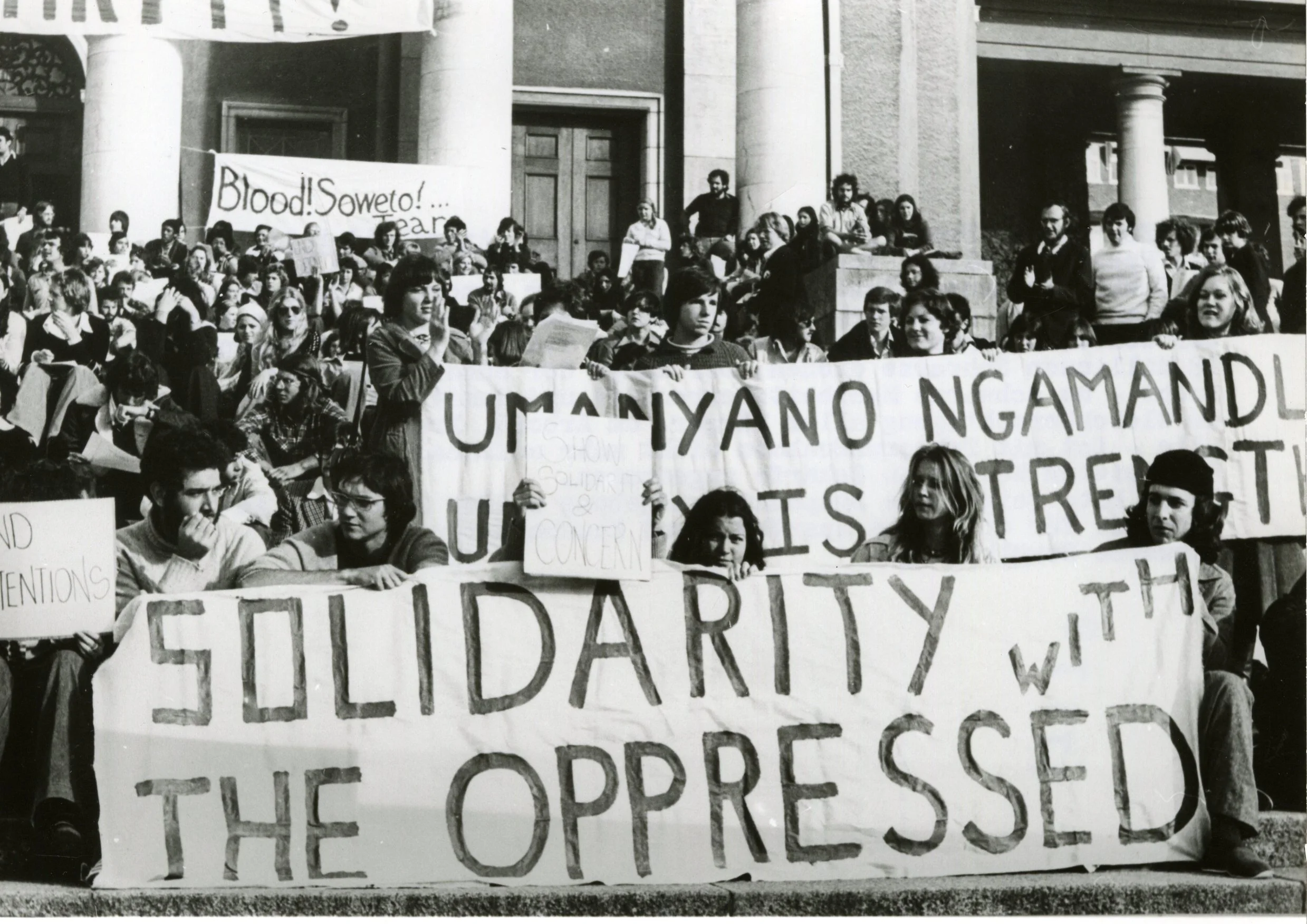
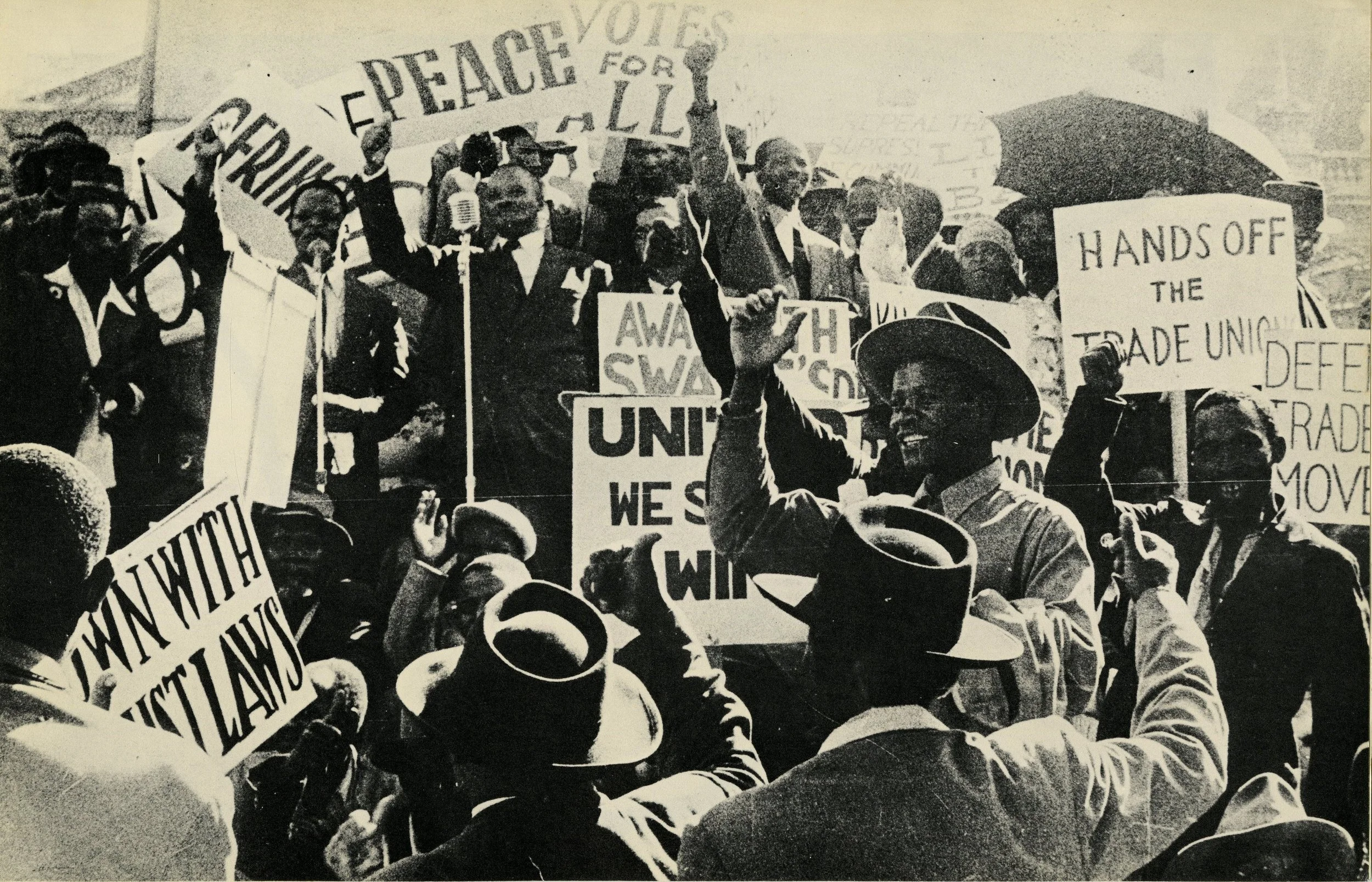
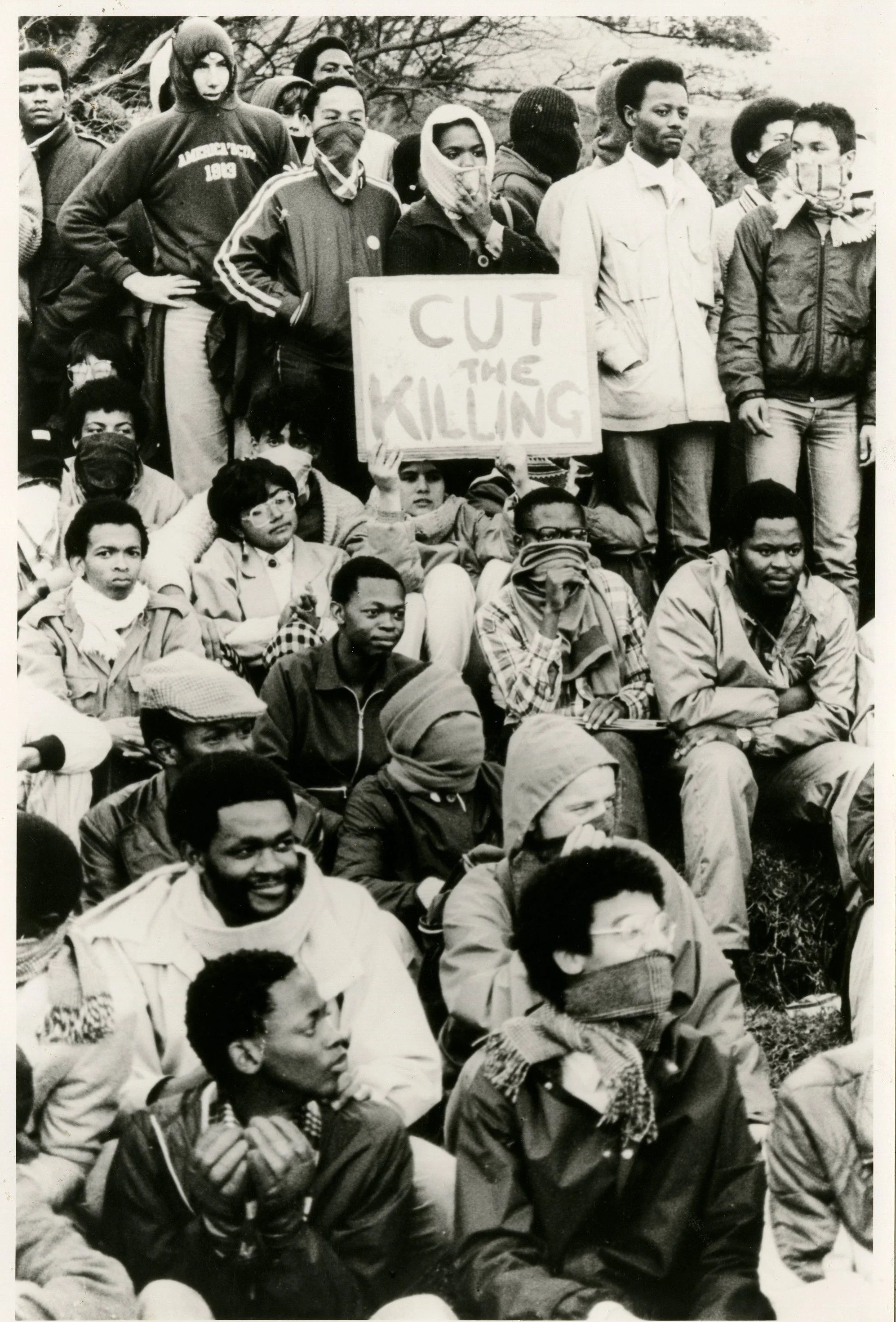
Demonstrations against apartheid.
ANC archives, University of Fort Hare
Voices against sanctions: Julian Amery
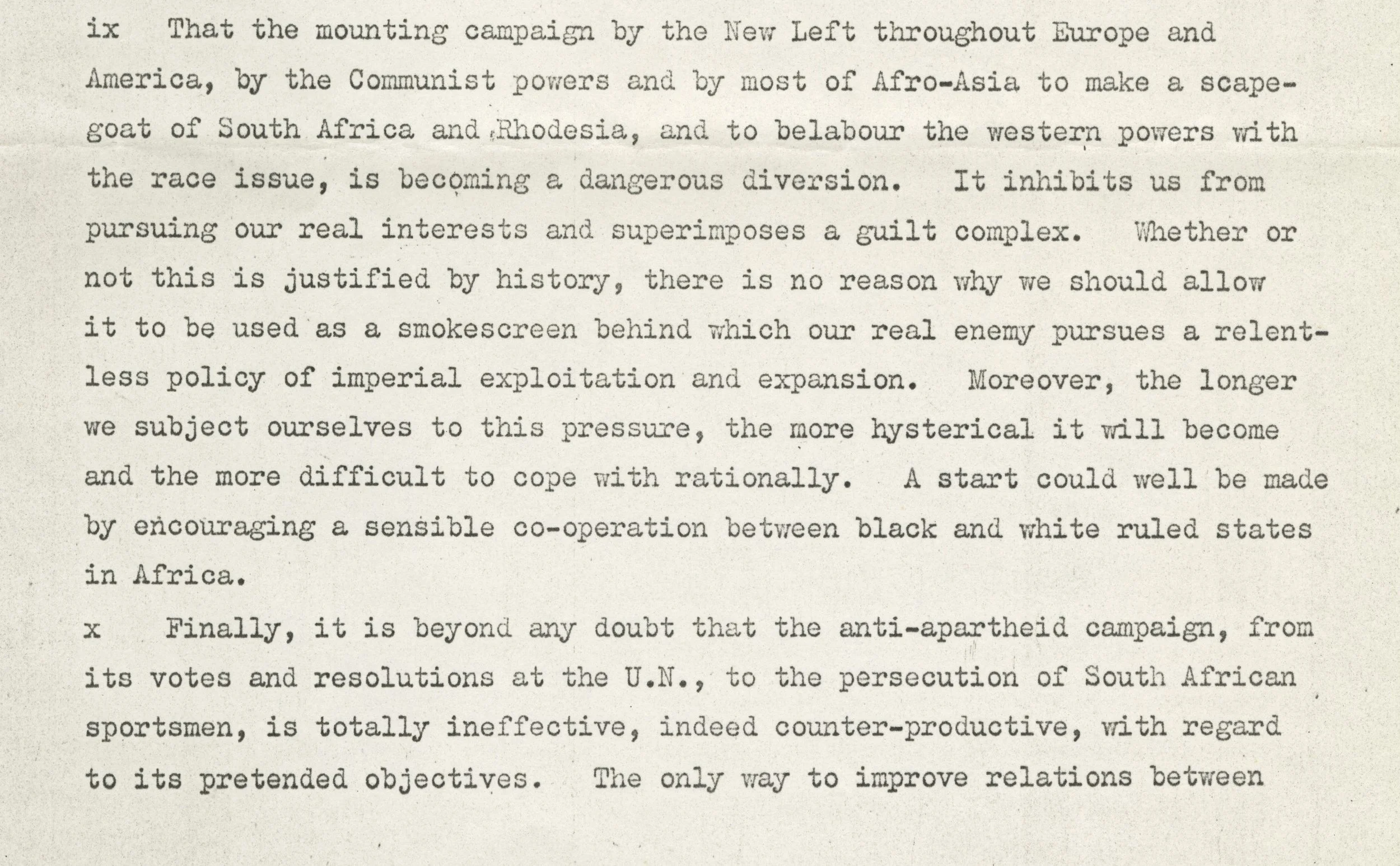
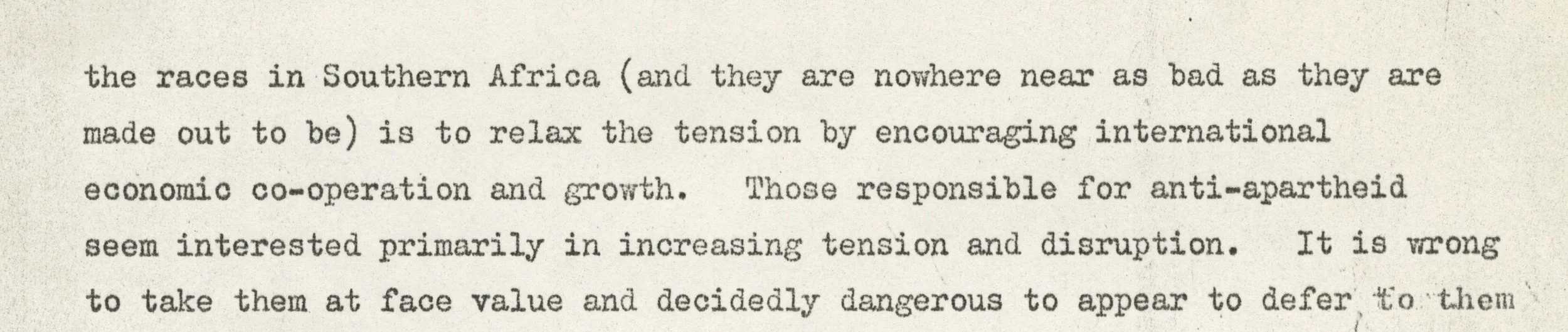
By contrast, the Conservative minister Julian Amery (1919-96) was very much on the right-hand side of the argument on South Africa. Younger son of the politician Leo Amery (himself Colonial and Dominions Secretary in the 1920s, and Secretary of State for India in Churchill’s wartime coalition), Julian Amery was a strong supporter of the Commonwealth. He was particularly hostile to the sanctions campaign, taking the view (along with his colleagues in the influential foreign policy forum Le Cercle) that such campaigns were being orchestrated and exploited by the Soviet Union for its own ends. British defence and trade interests would best be served by closer ties with the existing authorities (certainly not the ANC, with its links to Communism); meanwhile, the anti-apartheid campaign was ‘totally ineffective, indeed counter-productive’. According to Amery and his wing of the Conservative Party, the only way to improve relations between the races in Southern Africa (and help Britain at the same time) was ‘to relax the tension by encouraging international economic co-operation and growth’, not impose sanctions.
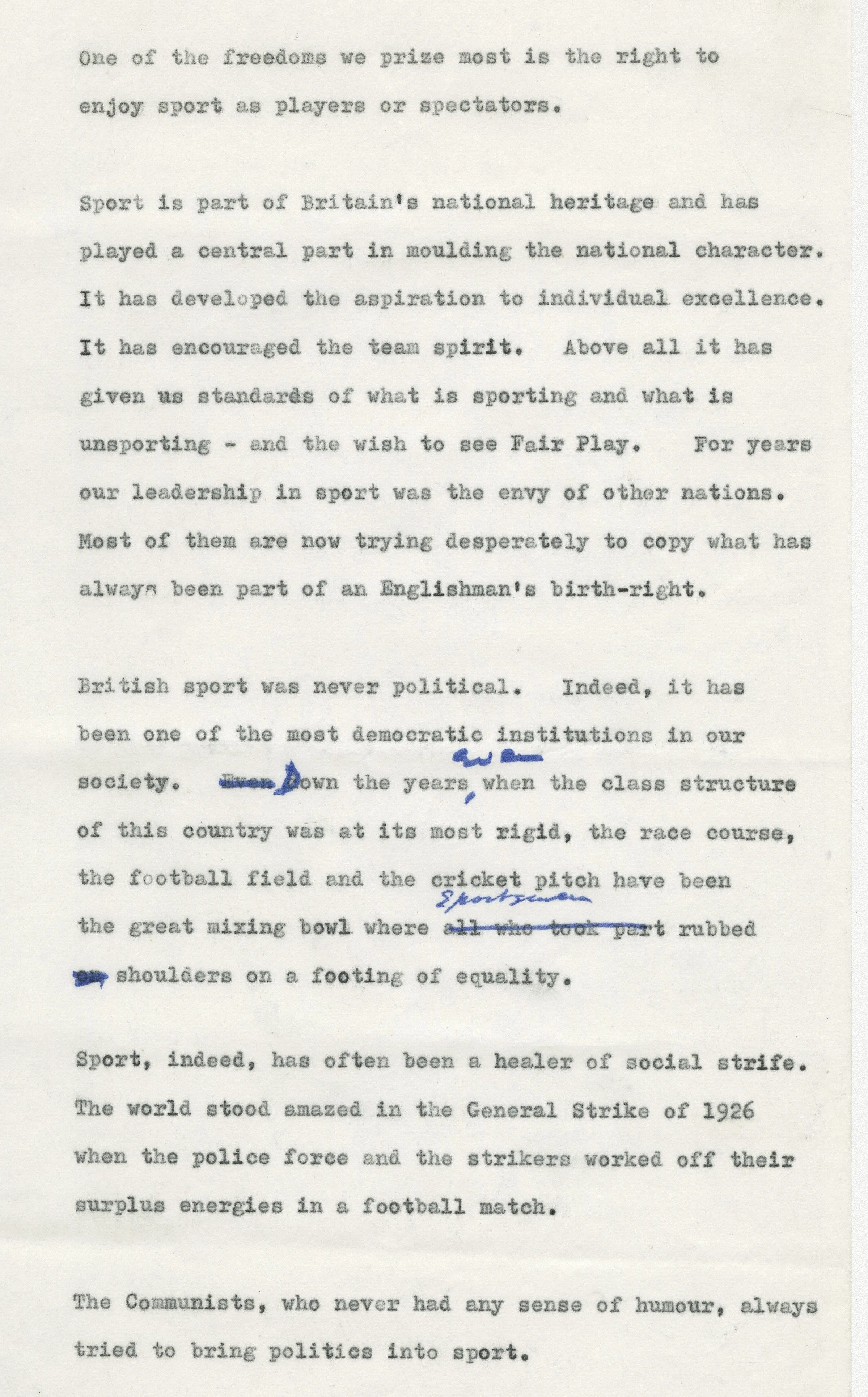
Julian Amery in 1972, Amery Papers, AMEJ 10/11
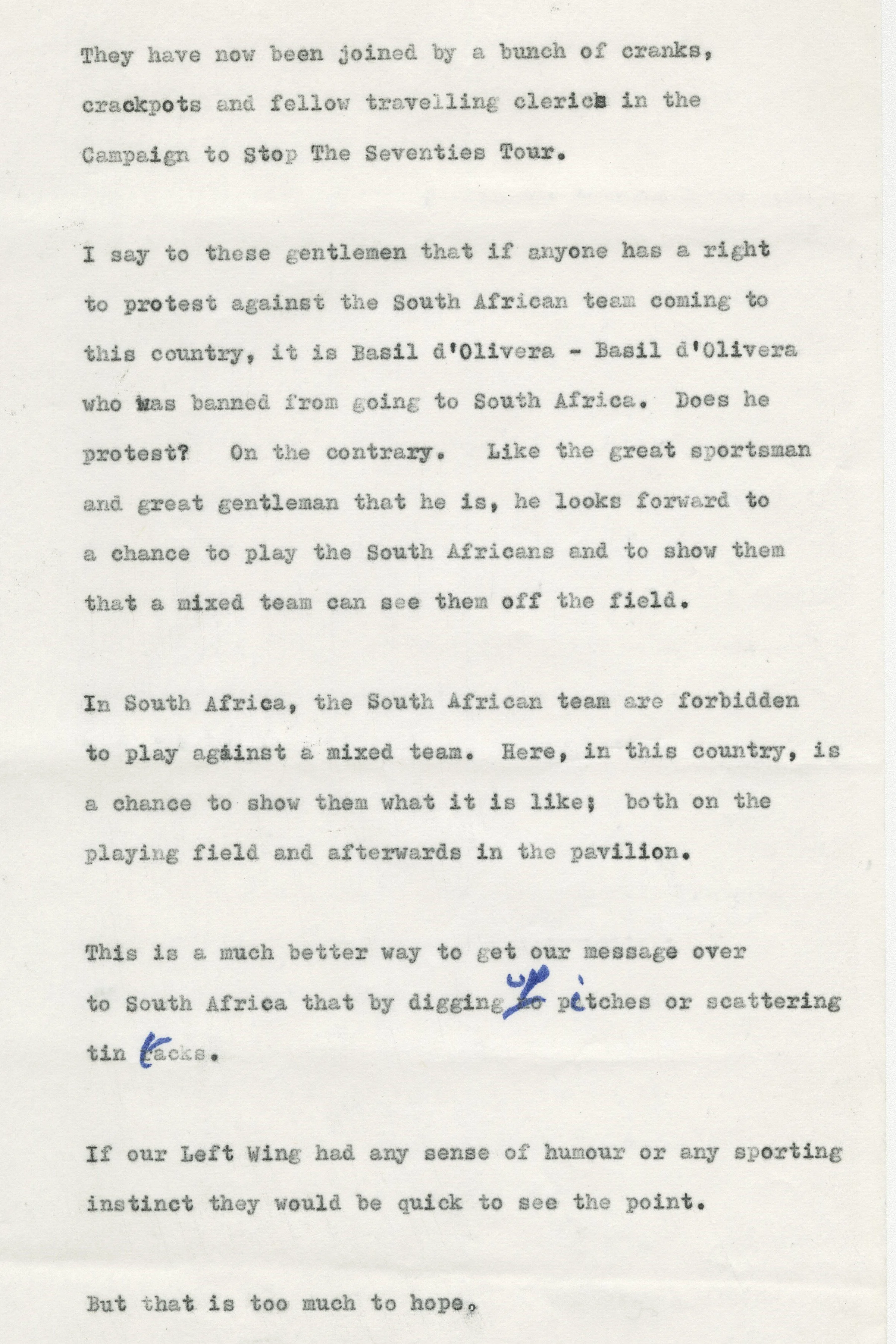
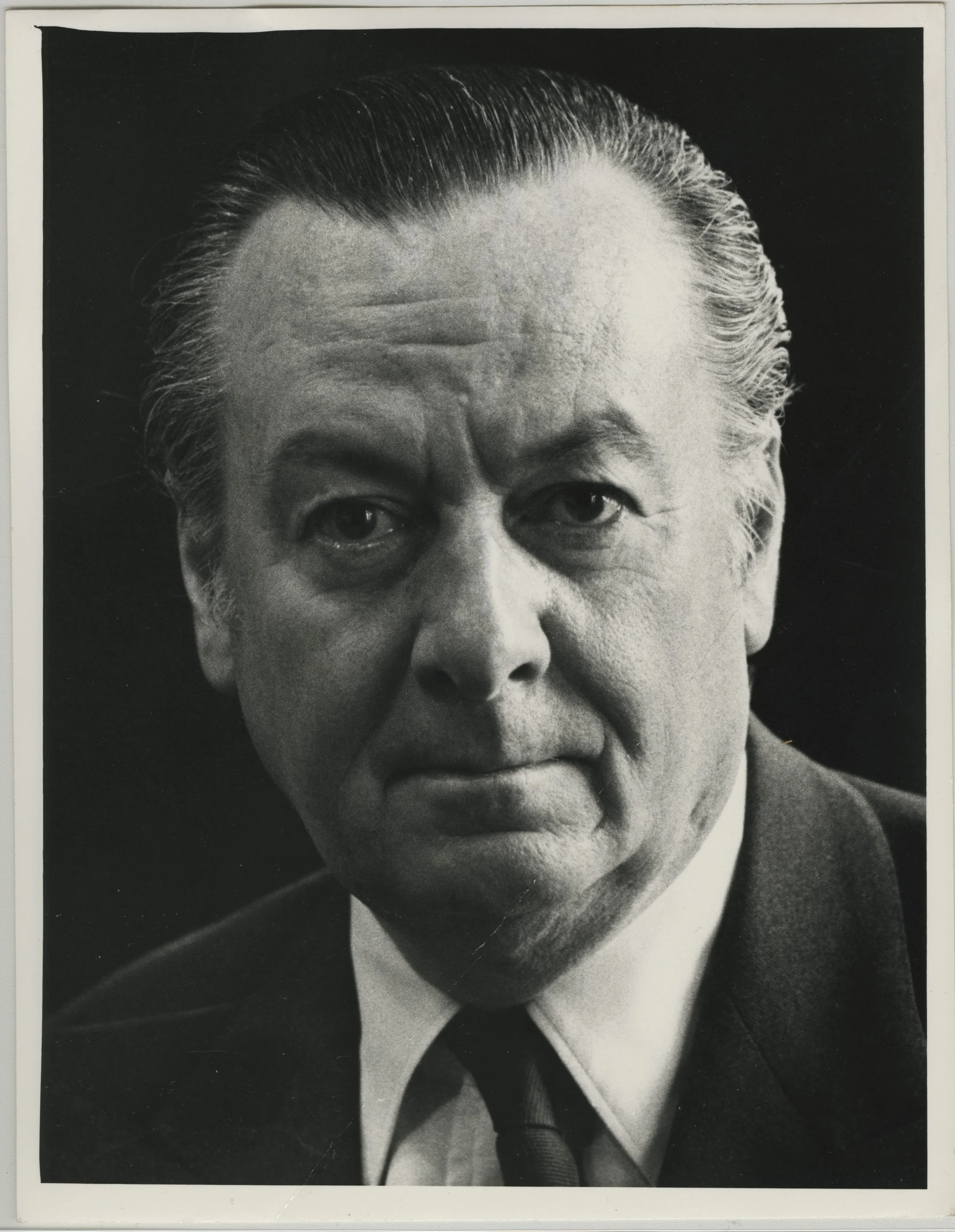
Part of a speech by Julian Amery in Trafalgar Square, May 1970, taking a very different view of the campaign to stop the South African cricket tour. He cites the case of the England international cricketer Basil d’Olivera, former captain of South Africa's national non-white team, who had been selected to play for England in the 1968–69 Test series in South Africa. In the event, the tour was cancelled by South Africa due to d’Olivera’s inclusion; the South African national side was to be banned from Test cricket for the next 22 years.
Julian Amery Papers, AMEJ 7/1/49
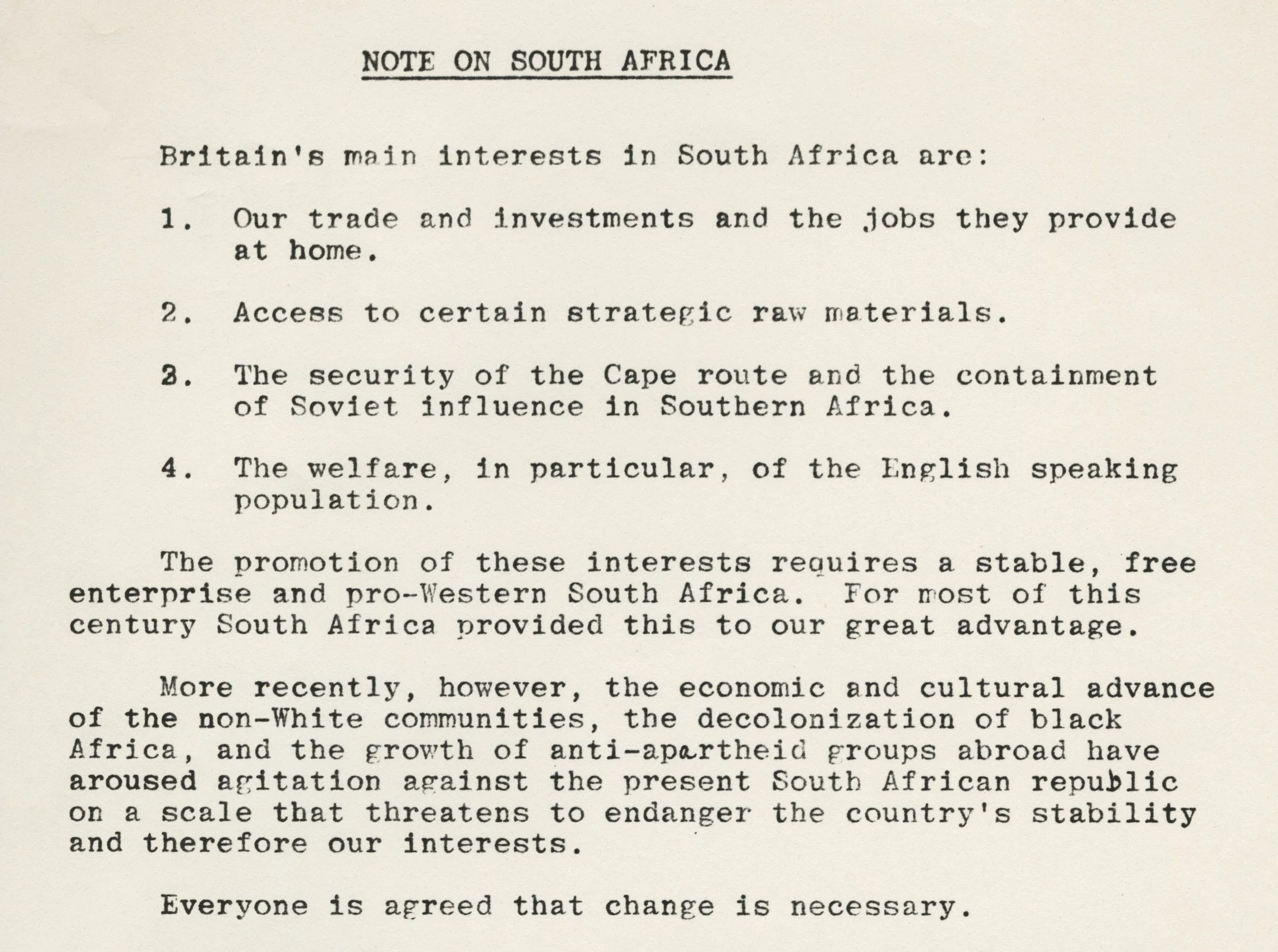
1985 paper by Amery bluntly setting out the importance to Britain’s interests in having a stable South Africa.
Julian Amery Papers, AMEJ 1/7/33
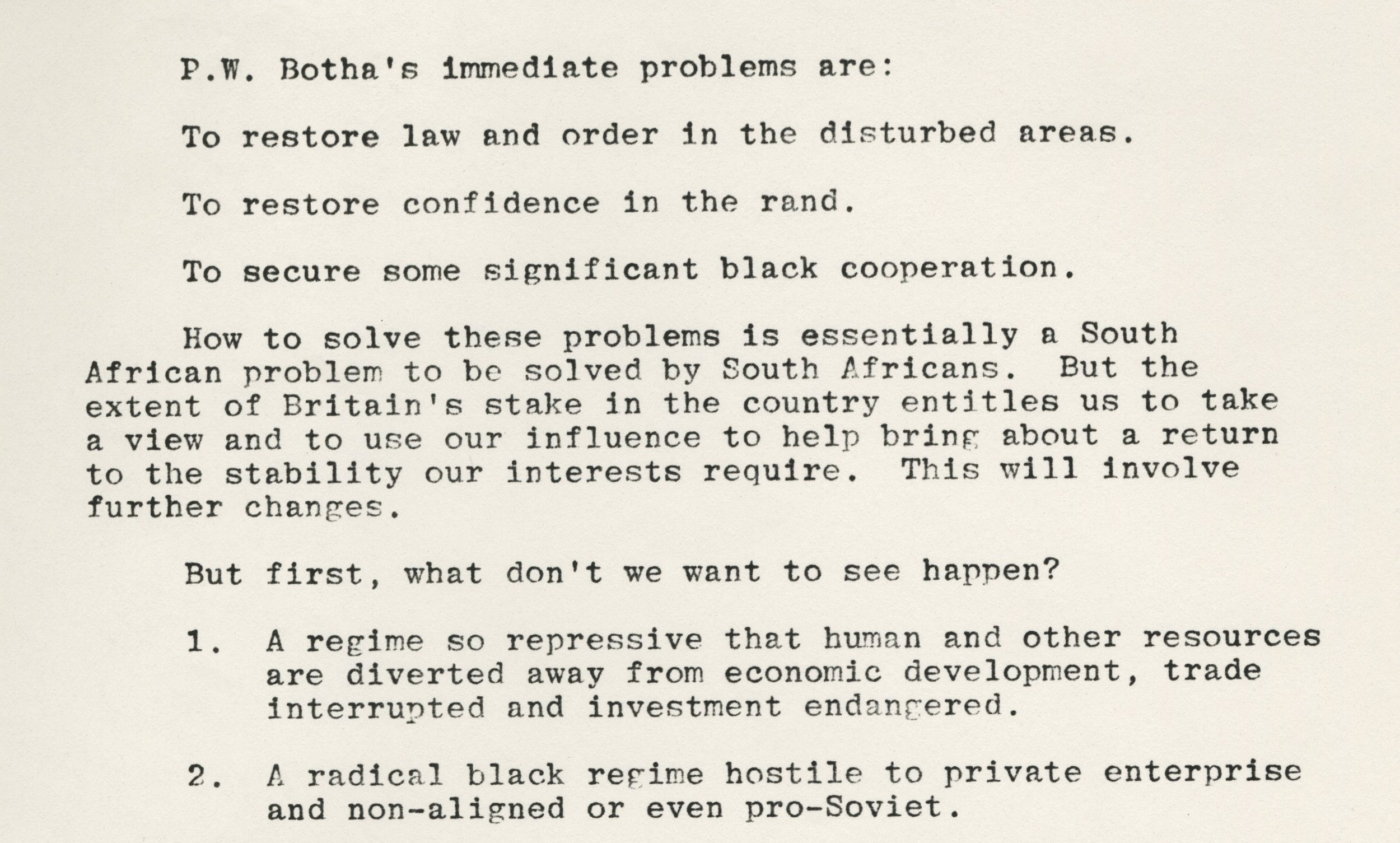

Part of a 1970 paper based on discussions within a Conservative group on policy towards Central and Southern Africa. The emphasis here is on the apartheid campaign being used as a smokescreen by ‘our real enemy’, ie the Soviets. The paper does admit that things in South Africa could be better, while maintaining that ‘they are nowhere near as bad as they are made out to be’, but the main emphasis is on securing British trade interests.
Julian Amery Papers, AMEJ 1/7/34
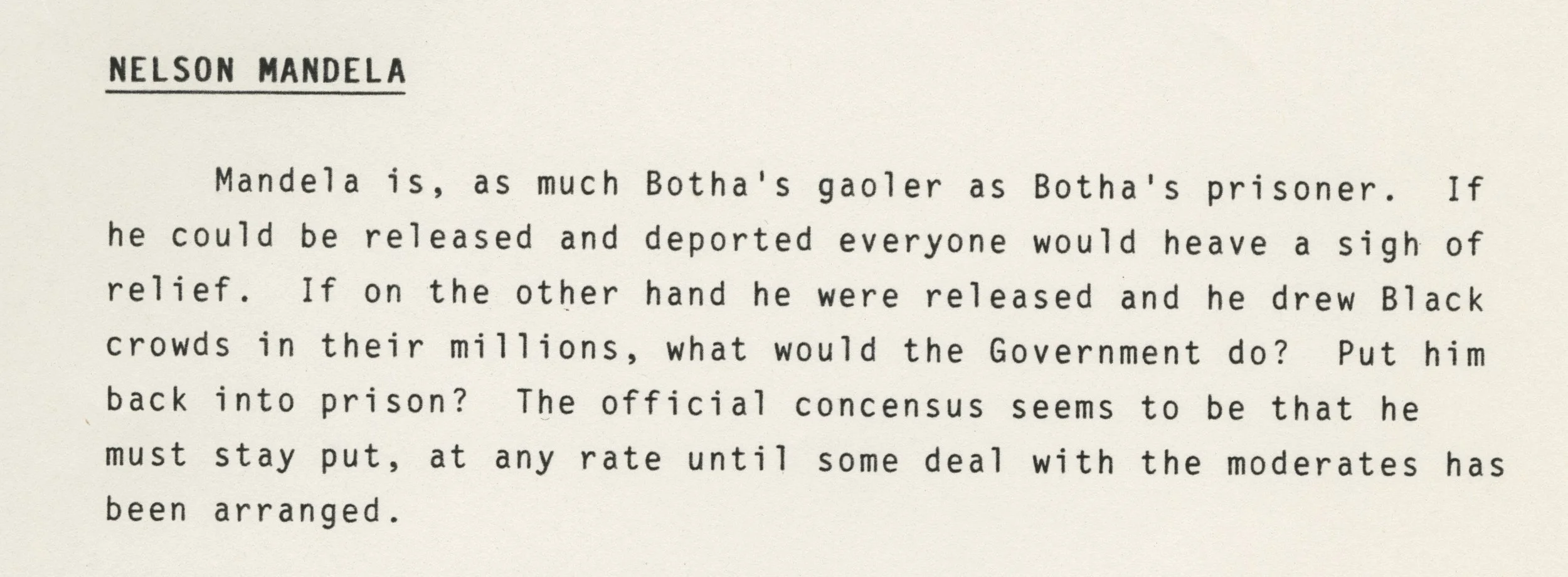
Note from Amery to the Prime Minister Margaret Thatcher, after his visit to South Africa in January 1986. This sheds a very practical light on the South African Government’s problem with what to do about the anti-apartheid activist and ANC member Nelson Mandela, imprisoned since 1962. Mandela was finally freed in 1990 and became the first president of South Africa, as well as the country's first Black head of state, in 1994.
Julian Amery Papers, AMEJ 1/10/46
The view from the embassy: the British Diplomatic Oral History Programme
One of our best sources on foreign policy is the BDOHP. This programme has been running since 1995, and is still recording interviews with recently retired diplomats. Here are a few extracts from interviews with some former Ambassadors to South Africa, and other senior figures, both at the British embassy in Pretoria or involved in policy towards South Africa from the 1970s-90s.
Please note that the transcripts of these audio extracts are not necessarily an exact copy.
First on the list is David Summerhayes, who was Minister in Pretoria (ie a senior diplomat, often deputy to the ambassador) from 1974-78. He describes the difficult balancing act for the Government in trying to persuade South Africa to change course without imposing sanctions.
Sir John Leahy was Ambassador to South Africa, 1979-82. Here he talks about early glimmers of change and attempts to offer discreet support to opponents of the apartheid regime.
Charles Powell was Margaret Thatcher’s Private Secretary from 1983-91. Here he gives a robust defence of Thatcher’s policy on South Africa.
Moving on to the 1980s, here is Derek Tonkin, Minister in Pretoria, 1983-86, on the final years of apartheid.
Finally Charles Crawford, 1st Secretary, Pretoria 1987-91, on dealing with the end of apartheid and the difficult aftermath.
The Government’s side: Margaret Thatcher
The Government’s position on South Africa was not an easy one. The Thatcher archive contains many reports from Conservative MPs from both sides of the argument: some like Amery saying that Britain’s interests were best served by continuing to deal with the South African authorities, others, like the moderate MP Charles Morrison, warning in 1978 that “we should be deluding ourselves if we believed that Government could exclude itself from the public debate which will continue to occur. … There is still a fundamental adherence to apartheid although there is some blurring of its most unattractive edges… If in those respects United Kingdom interests are not to suffer, every effort must be made to persuade South Africa that unless it changes its internal policies it is likely to become more difficult for us to continue to trade with it and to invest there.”
Thatcher Papers, THCR 2/1/2/14
Notes for Thatcher’s speech at the Commonwealth Heads of Government Meeting in the Bahamas, October 1985. In it she both outlines her opposition to apartheid and also her reasons for refusing to impose economic sanctions.
Thatcher Papers, THCR 5/1/5/352
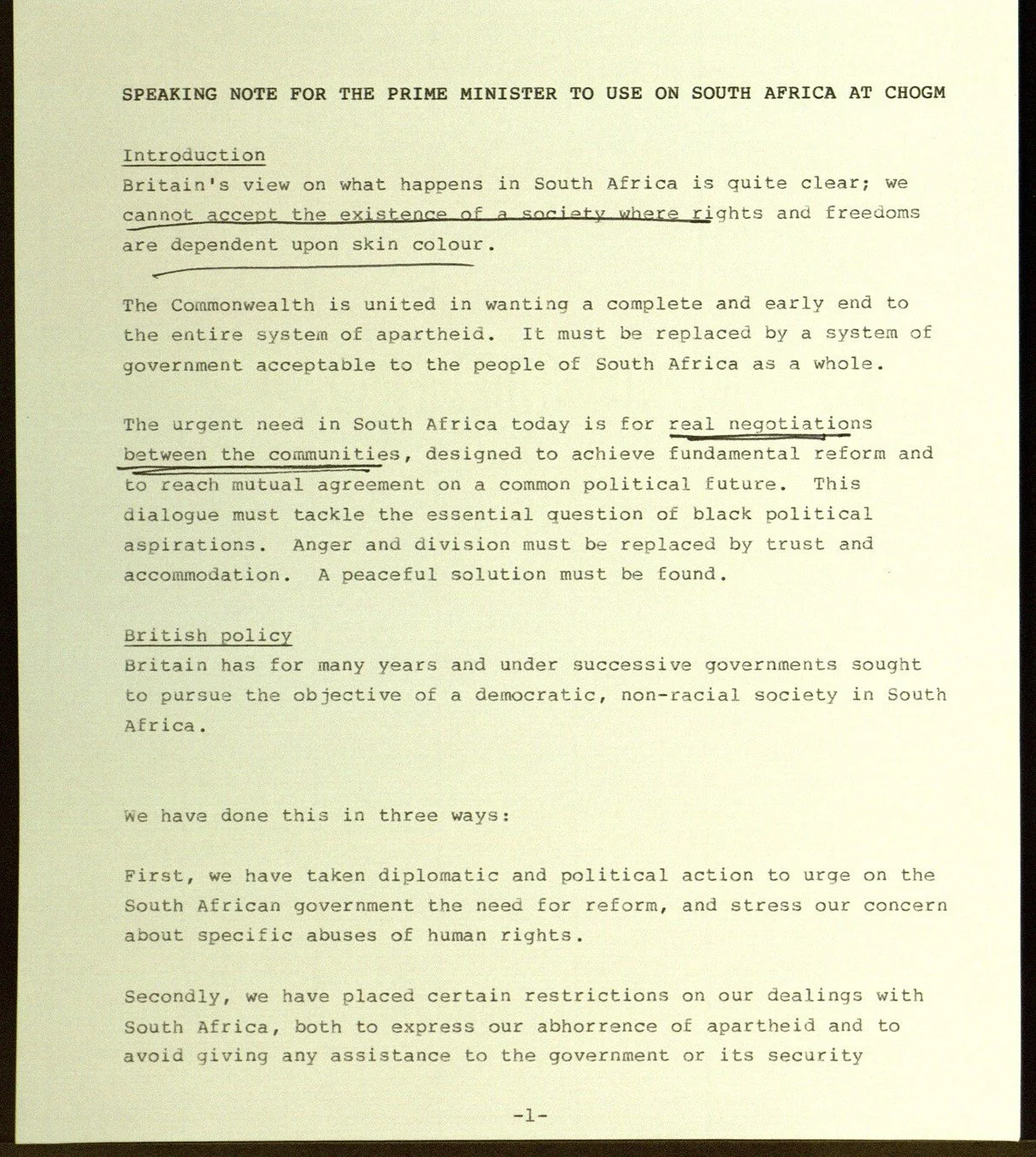
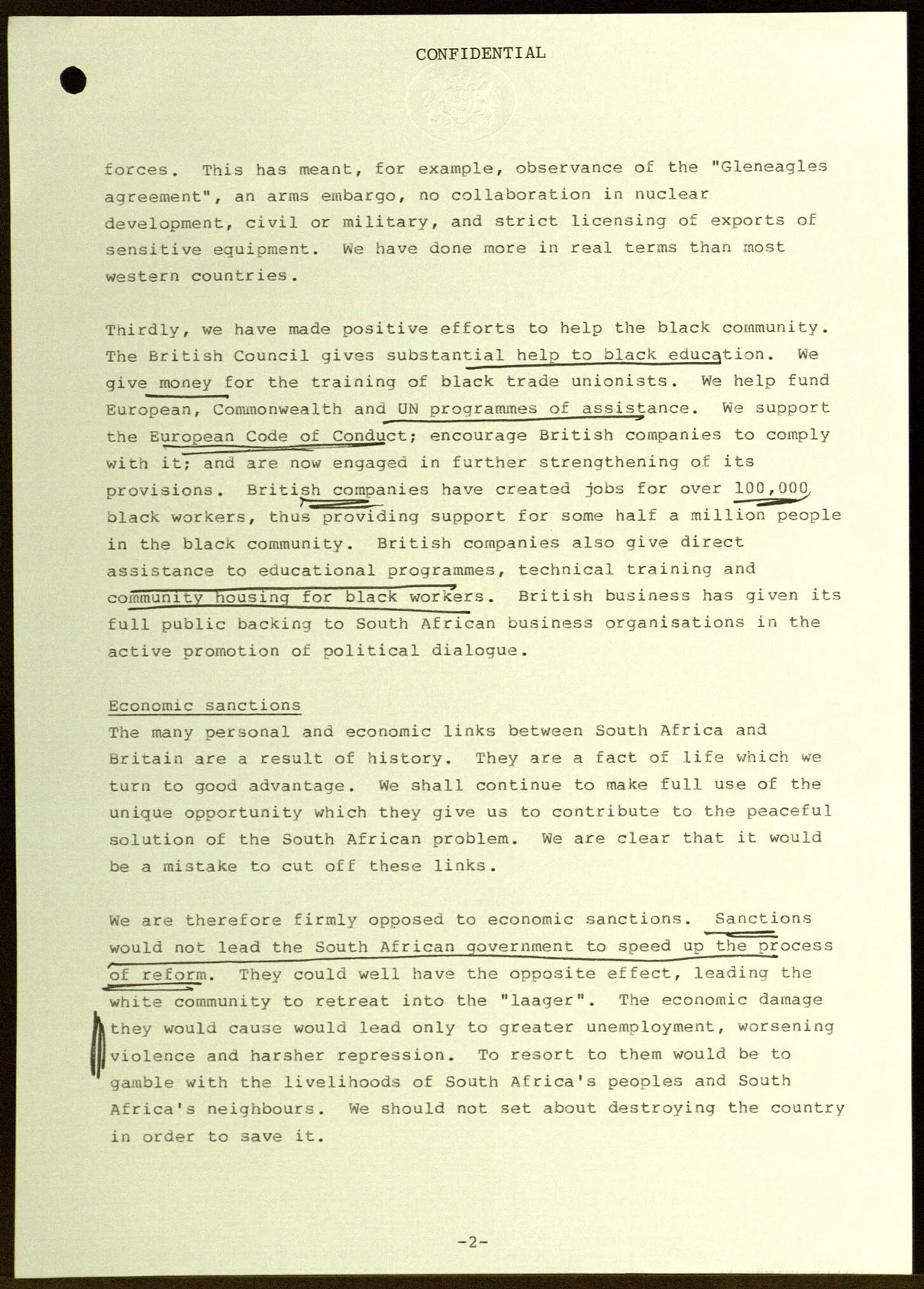
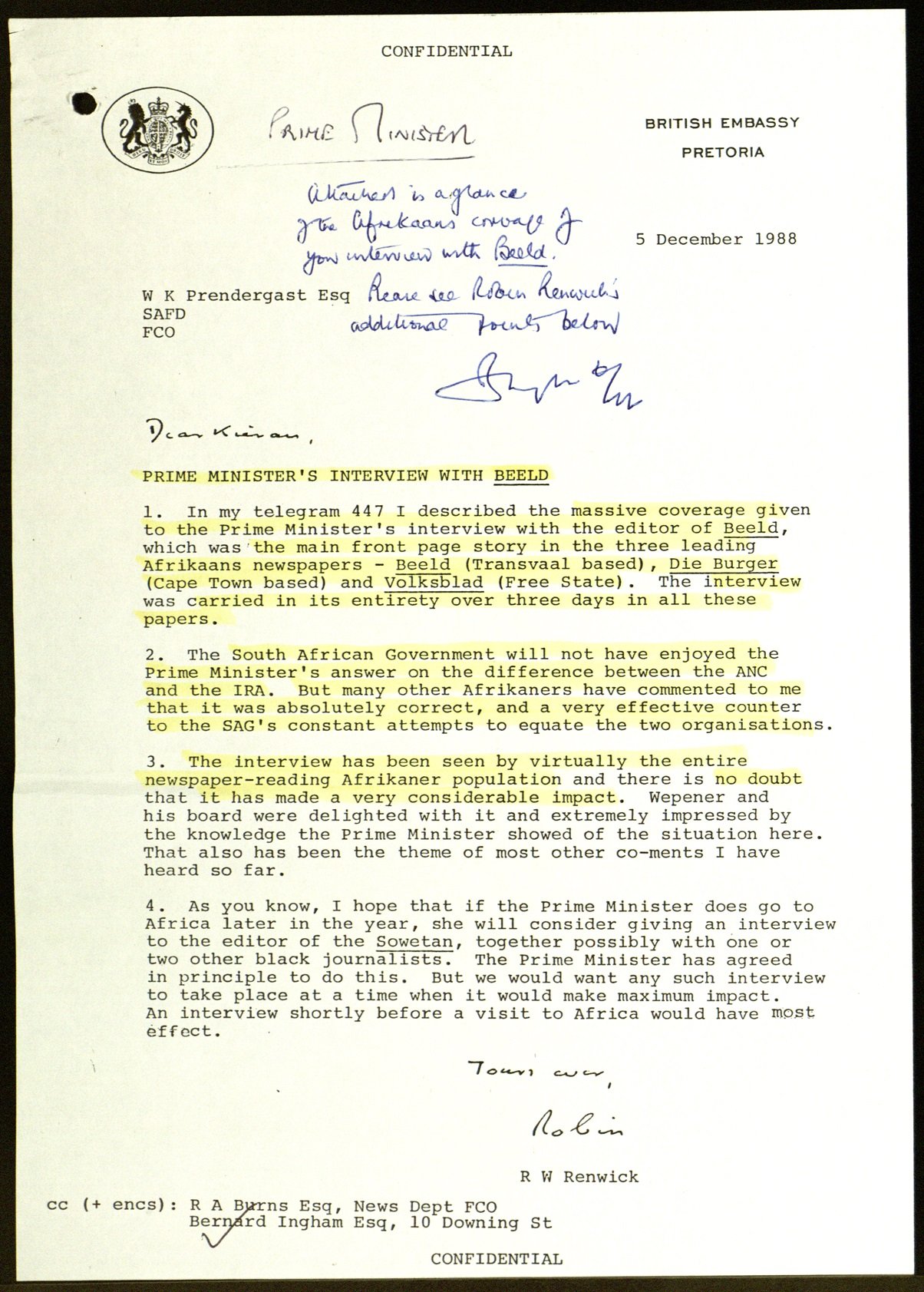
In this 1988 note from Robin Renwick, Britain’s Ambassador to South Africa, we can see a change in attitude. Renwick comments on how Thatcher’s refusal to equate the ANC with the IRA would have gone down, and advises her to speak to Black journalists if she visited the country.
Thatcher Papers, THCR 1/16/28.
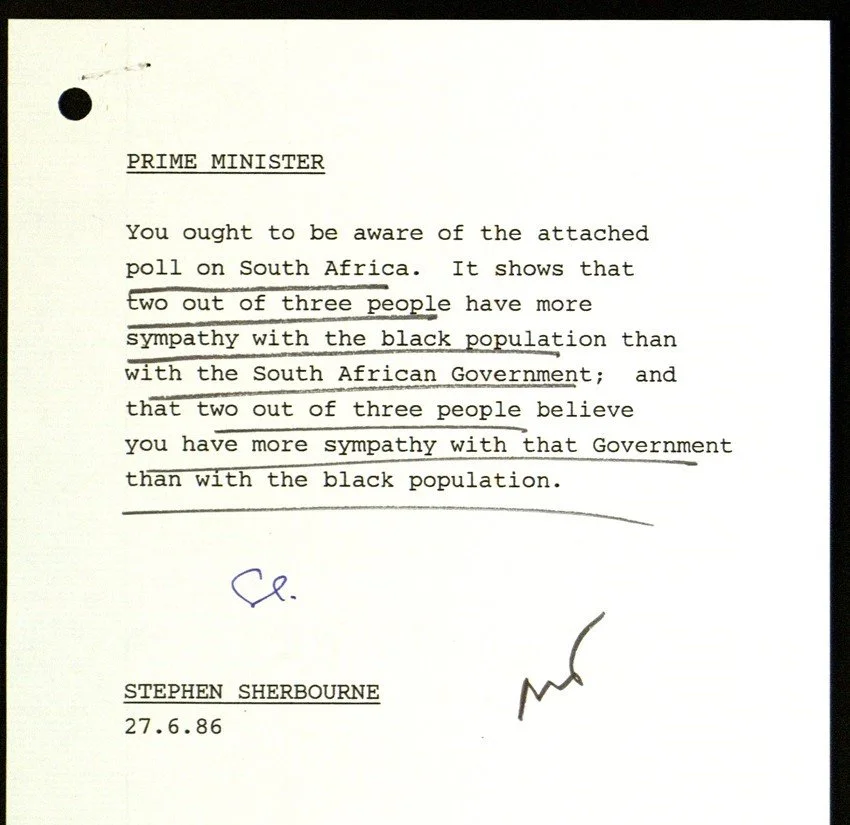
Conservative Research Department briefing note on "Attitudes to South Africa", June 1986, warning Thatcher that she was losing the argument with public opinion.
Thatcher Papers, THCR 2/6/3/53
The anti-apartheid movement: Neil Kinnock and the Labour Party
Neil Kinnock, Leader of the Labour Party from 1983-92, was a long-standing member of the British Anti-Apartheid Movement. Whole-heartedly against the South African regime, he was also, unsurprisingly, a vehement critic of Margaret Thatcher’s anti-sanctions policy.
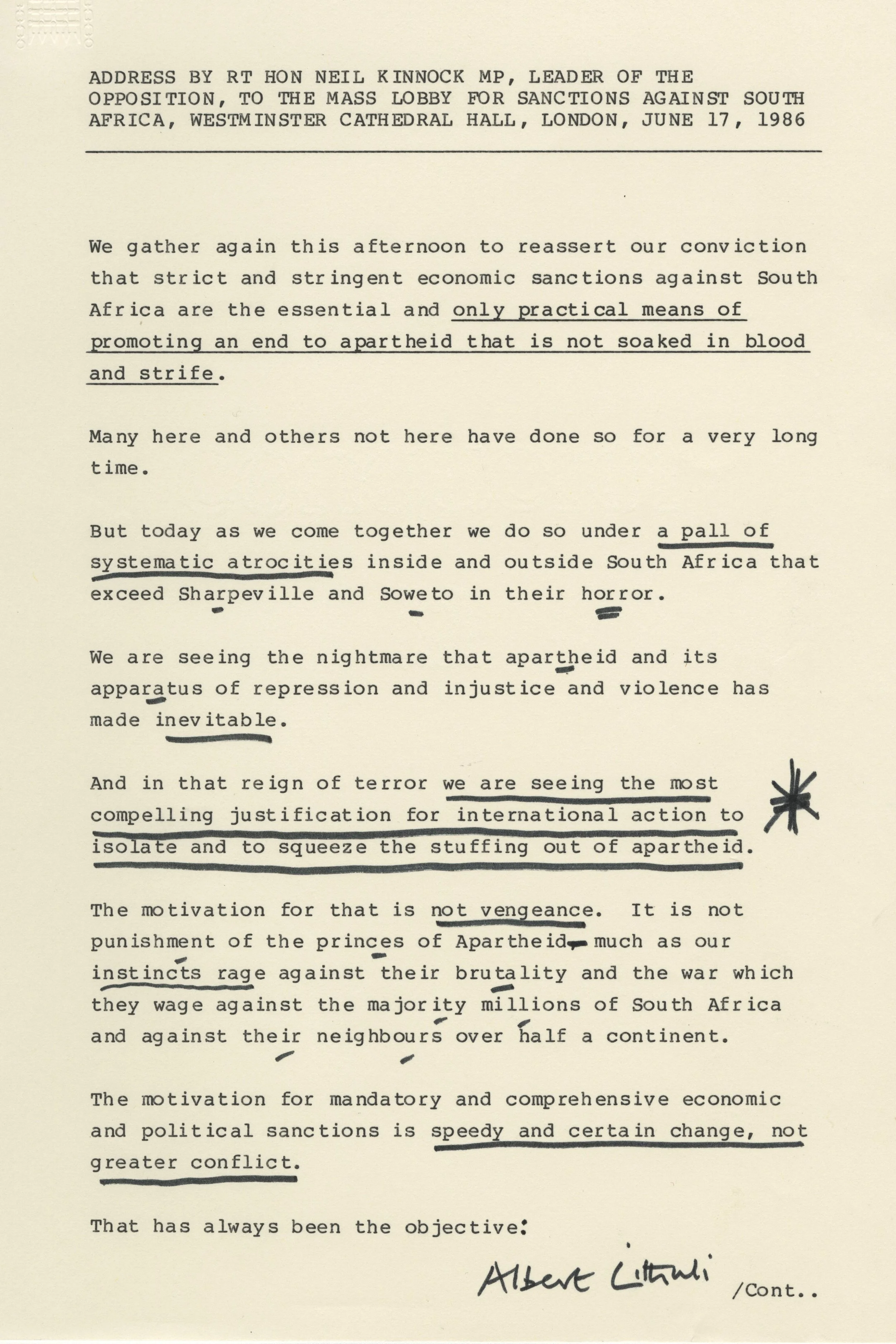
Speech by Kinnock, with his own underlinings for emphasis, to a mass lobby for sanctions against South Africa at Westminster Cathedral Hall, June 1986.
Kinnock Papers, KNNK 16/1/26
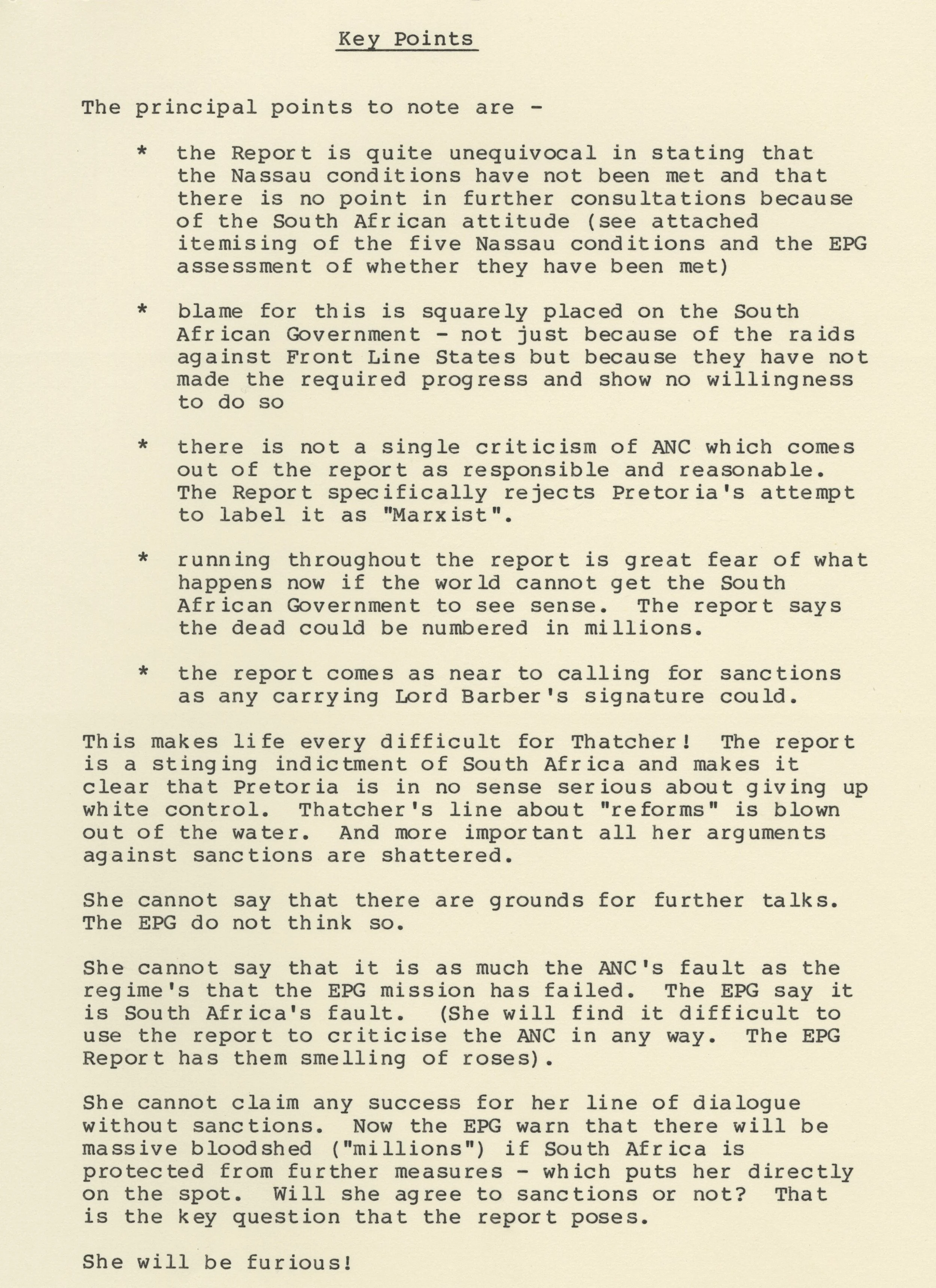
Part of a briefing on the Report of the Commonwealth Eminent Persons Group (published June 1986), noting the failure of the South African Government to address apartheid, which was not good news for Thatcher’s anti-sanctions policy.
Kinnock Papers, KNNK 19/4/26
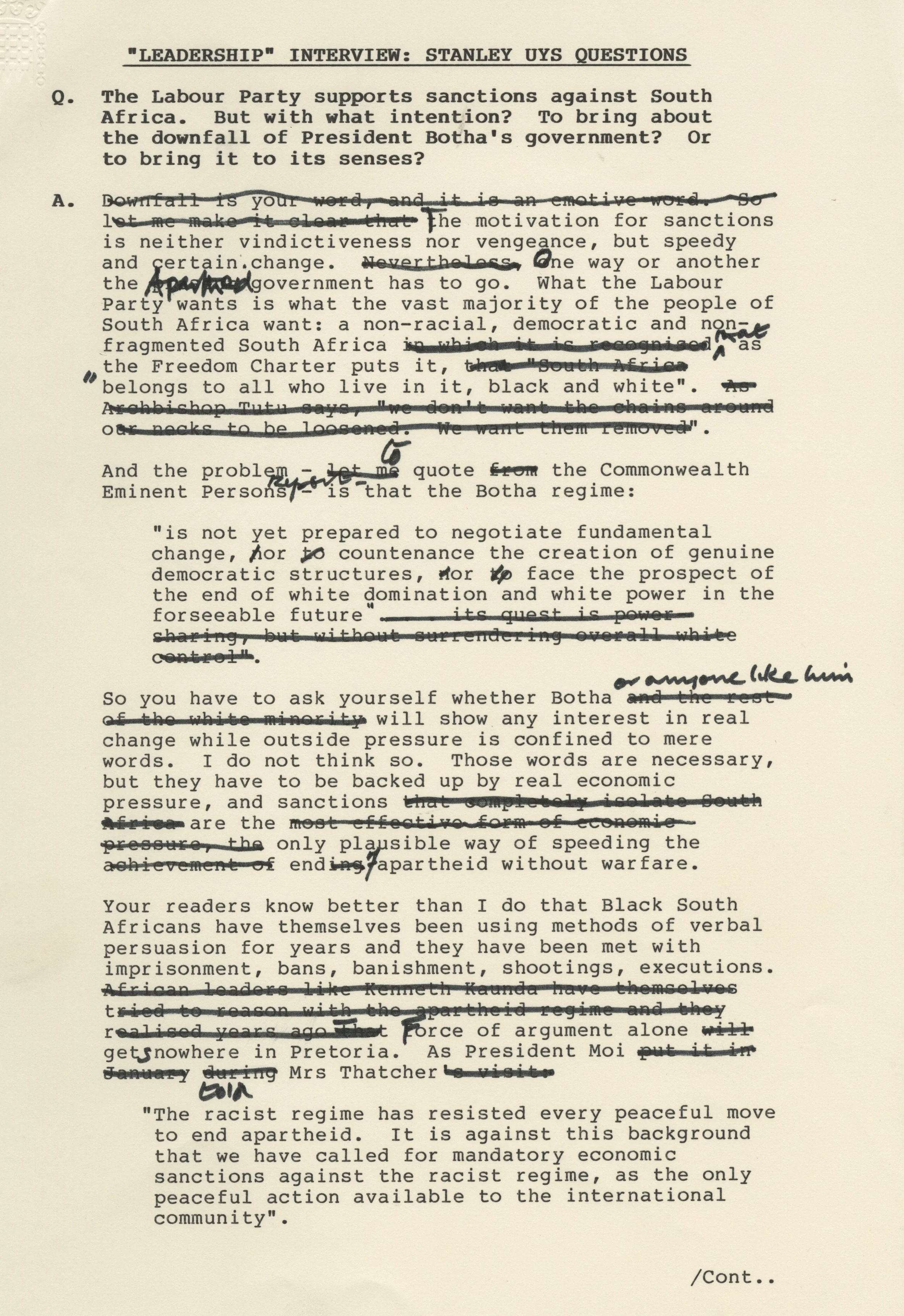
Interview annotated by Kinnock himself on the intentions behind Labour’s support for sanctions, for Leadership magazine in 1988. Stanley Uys was noted in Kinnock’s brief as the ‘best journalist out of S Africa’.
Kinnock Papers, KNNK 10/1/28
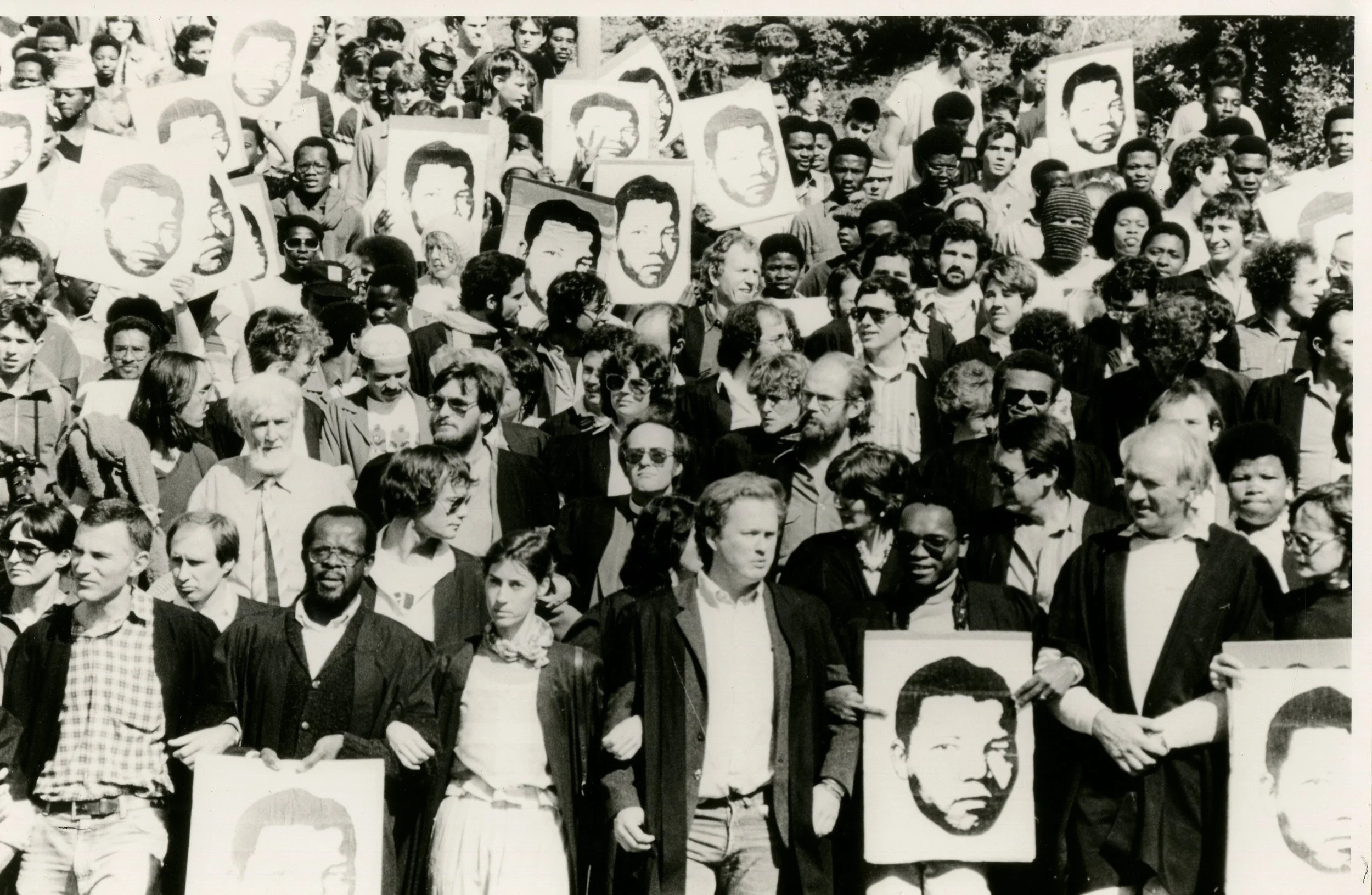
Demonstration on behalf of Nelson Mandela.
ANC archives, University of Fort Hare
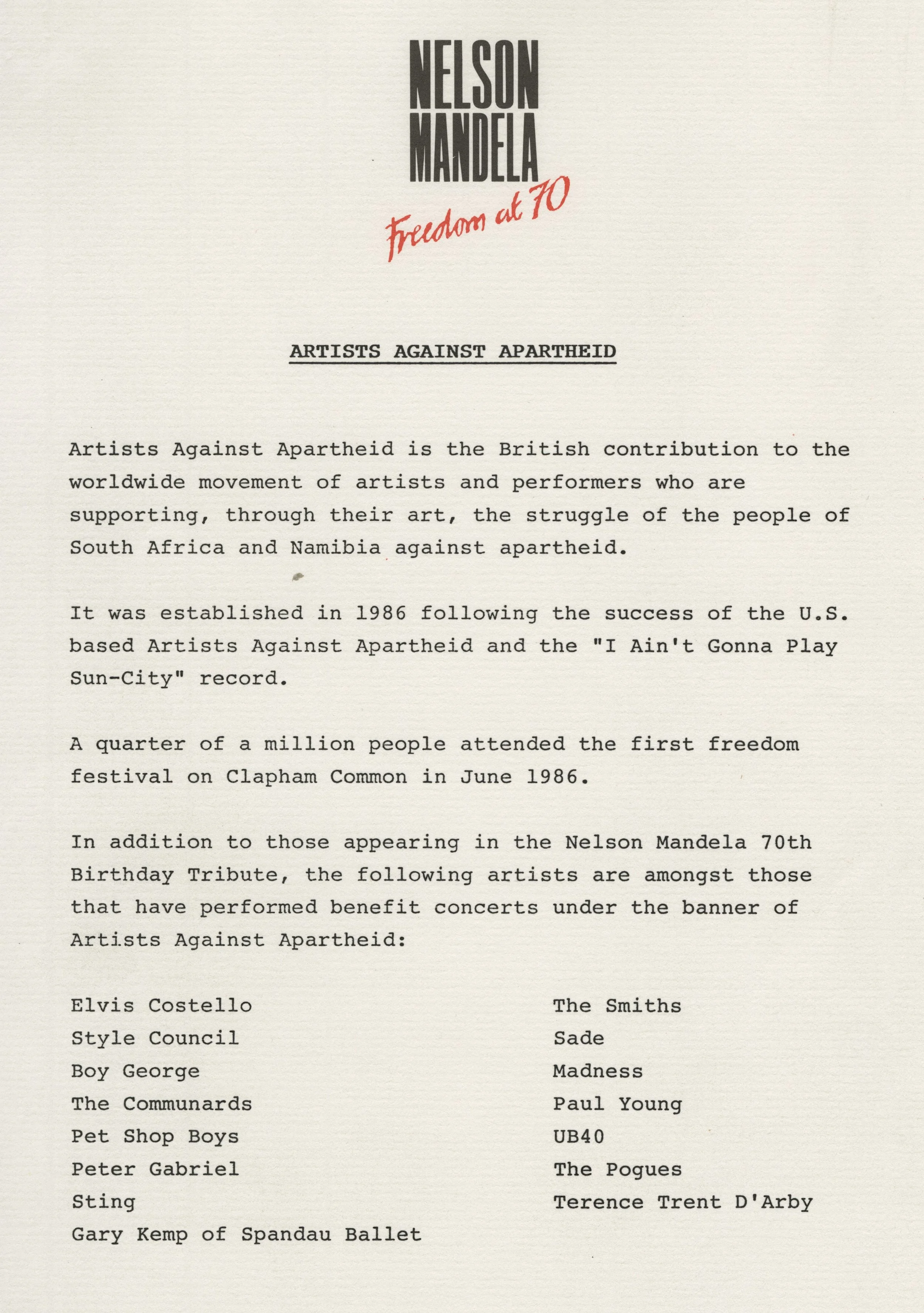
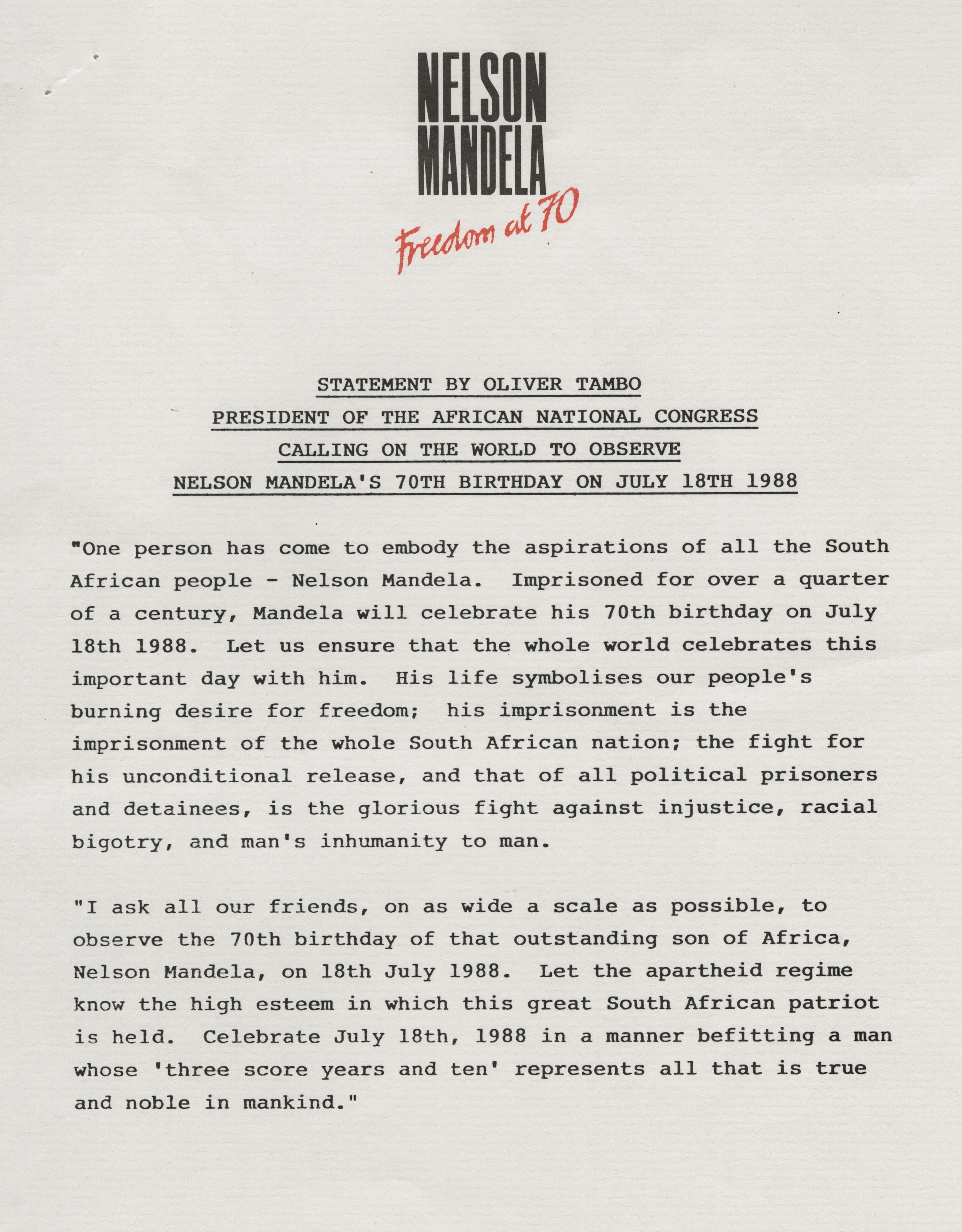
Flyers from the Anti-Apartheid Movement’s Nelson Mandela Freedom at 70 campaign, produced for Mandela’s 70th birthday in 1988.
Kinnock Papers, KNNK 10/1/32
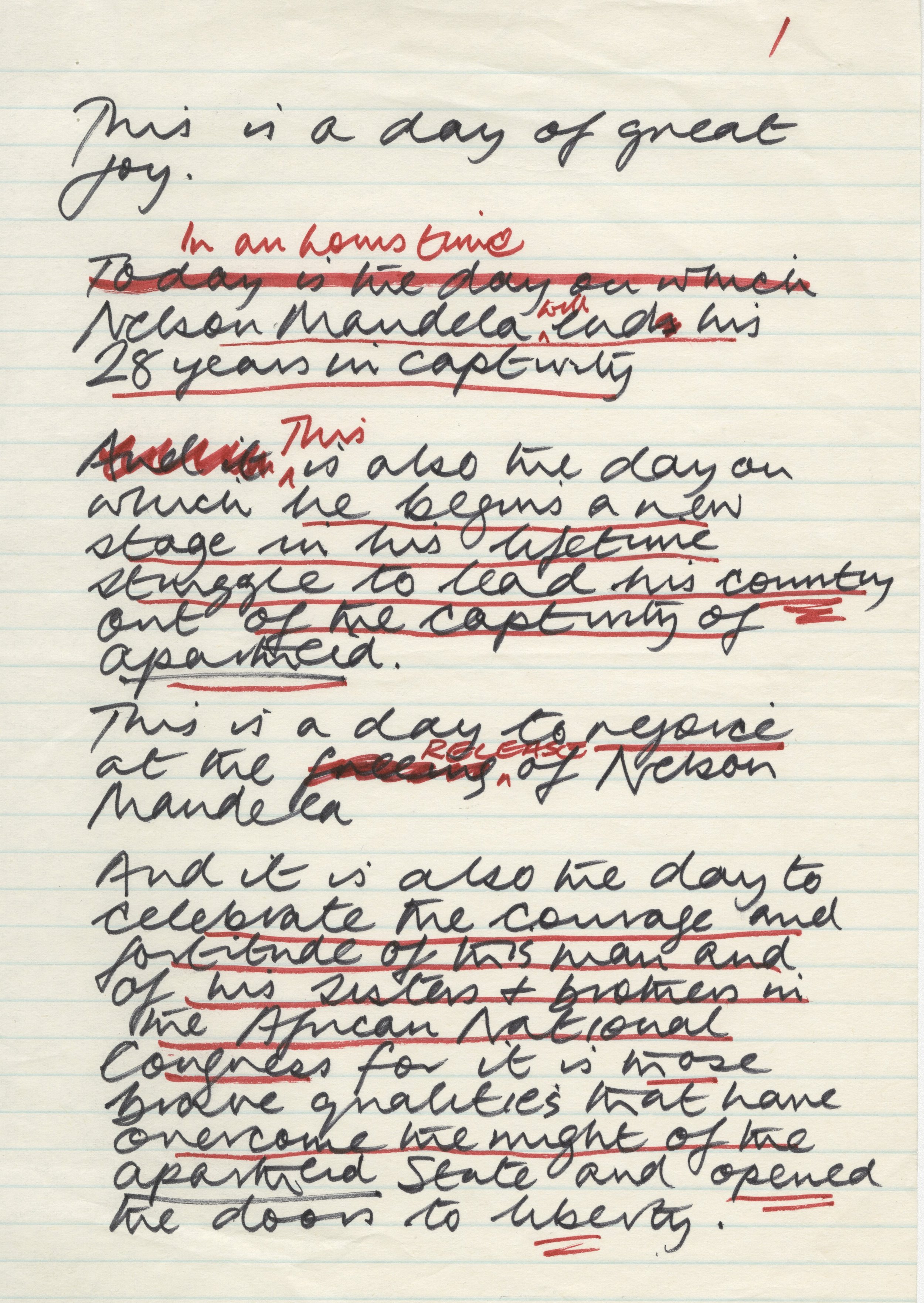
Rough draft of Kinnock’s speech on the day of Mandela’s release, on 11 February 1990:
‘This is a day of great joy.
‘In an hour’s time Nelson Mandela will end his 28 years in captivity.
‘This is also the day on which he begins a new stage in his lifetime struggle to lead his country out of the captivity of apartheid.
‘This is a day to rejoice at the release of Nelson Mandela.
‘And it is also the day to celebrate the courage and fortitude of this man and of his sisters & brothers in the African National Congress for it is those brave qualities that have overcome the might of the apartheid State and opened the doors to liberty.’
Kinnock Papers, KNNK 16/1/45
After years of pressure both from activists within South Africa and internationally, apartheid legislation was finally repealed in 1991. Three years later South Africa held its first fully open elections.
Neil Kinnock led one of the teams of international observers charged with overseeing the fairness of the election in May 1994. One member of the team, the lawyer and politician Sir Ivan Lawrence, described the voting process on the day: ‘Hour after hour I saw thousands – mostly blacks, but a few whites – waiting patiently in the heat of the day. ... White Boer farmers forgot their past and offered their farm trucks to take black families to polling stations where queues were shorter. “We were wrong. We should have done this years ago”, I was told by one white man built like an oak tree who had ruled and spent all his life in the area of his polling station. ... “I’ve waited 70 years for this – another five hours doesn’t matter to me” an old black woman with tears in her eyes told me. At first I was disturbed to see so many children coming to vote, but then I realised that their parents were bringing them along to be witnesses to history. It was indeed a privilege to be there at such a time.‘
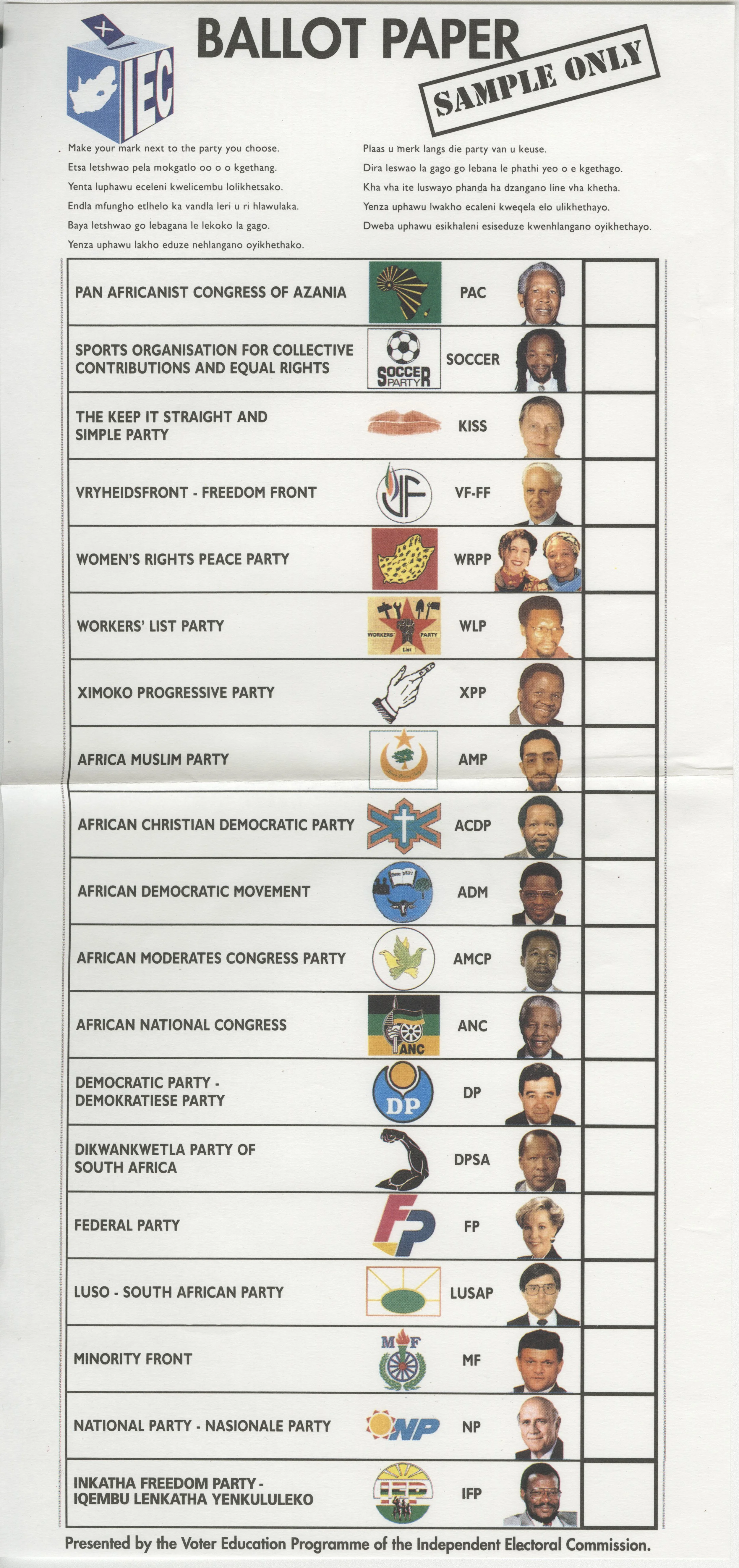
Sample ballot paper from the 1994 election.
Kinnock Papers, KNNK 10/1/52